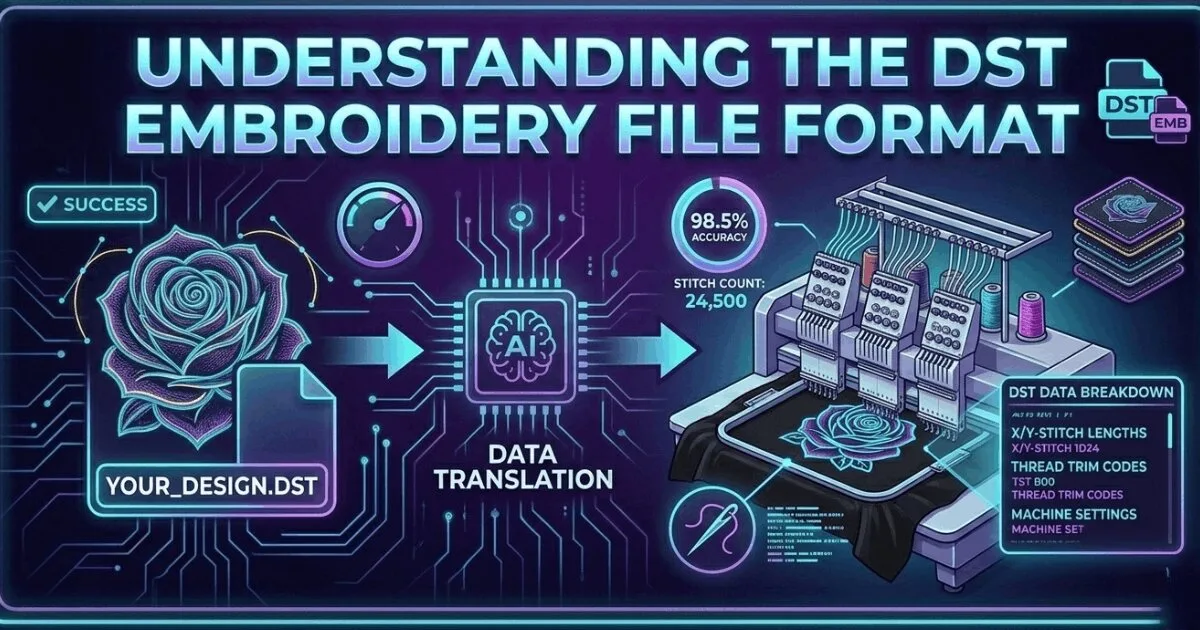
What Is a DST File? The Commercial Embroidery Format Explained
A DST file is the Tajima stitch format used by commercial embroidery machines worldwide. Learn what it contains, which m…
Read More
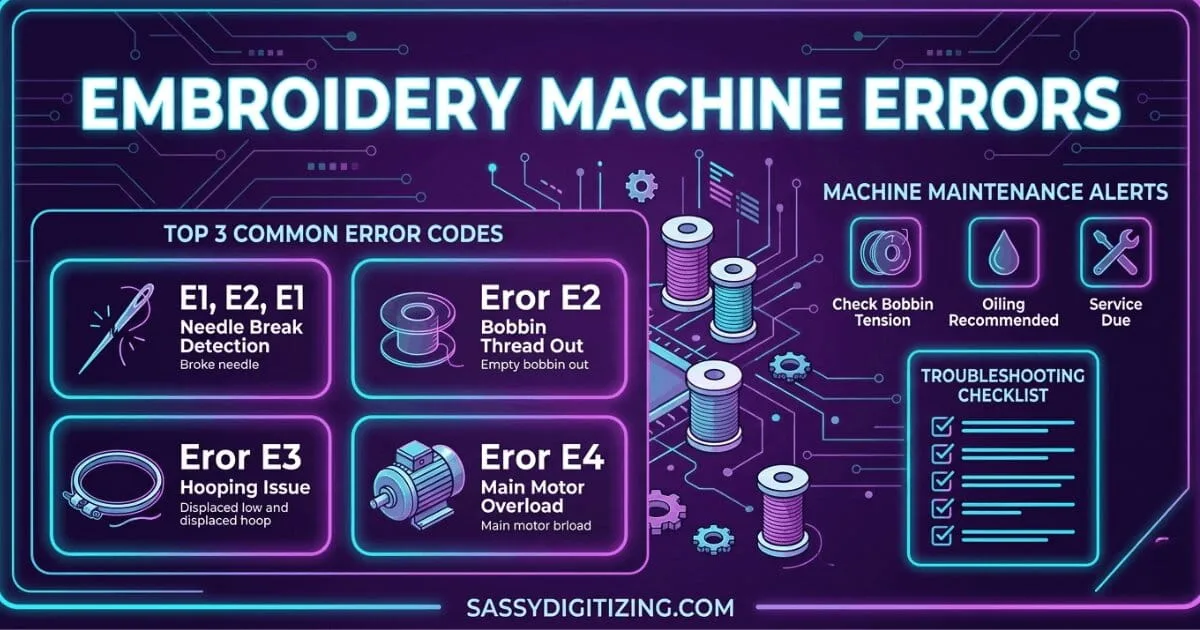
Embroidery machine errors typically come from either the machine (tension, mechanical, sensor issues) or the digitizing file (wrong format, bad stitch data, corruption). Knowing which one it is guides you to the right fix, and this guide outlines major errors with specific solutions.

4.7/5
Guaranteed File Compatibility & Industry Standards




Embroidery machine errors fall into two categories. Operational errors are caused by machine settings and mechanical issues. File errors are caused by problems in the digitizing file itself.
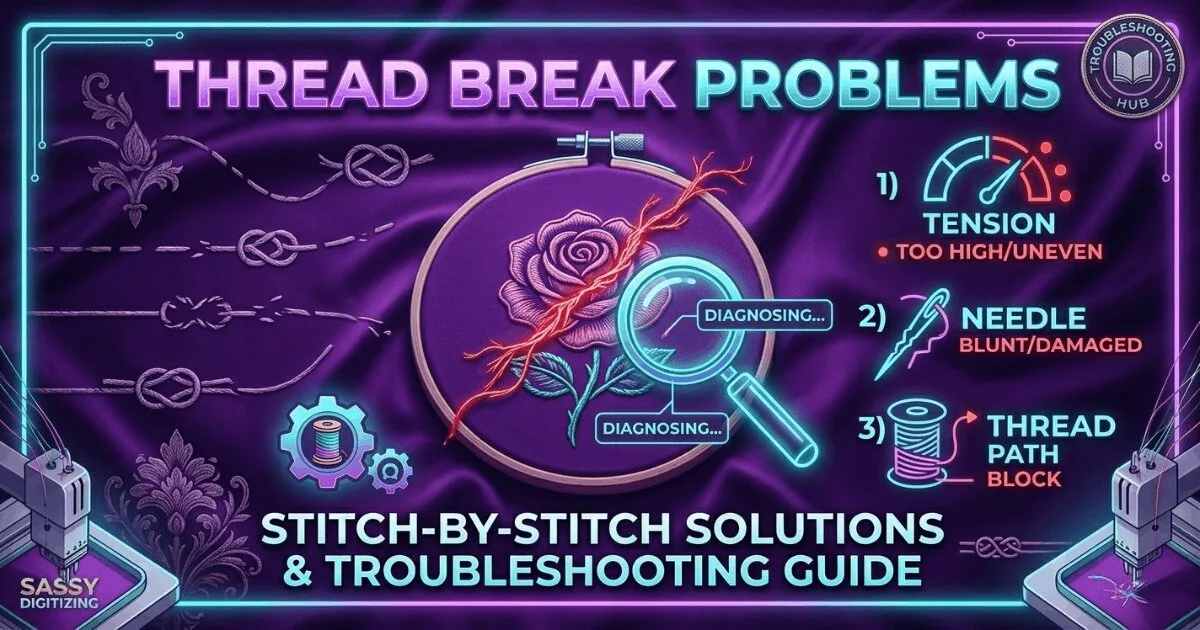
The most common embroidery machine error. Caused by incorrect upper thread tension, a blunt needle, incorrect thread path or excessive stitch density in the digitizing file.
The machine detects the bobbin thread is running out or is not loading correctly. Check the bobbin is fully wound, correctly inserted and that the bobbin tension is set correctly for your thread weight.
The machine cannot read the file from the USB or memory card. Common causes: wrong file format for the machine, corrupted file, wrong USB format (must be FAT32), or a PES file with the wrong version for your machine model.
Thread has nested under the hoop or a mechanical obstruction is blocking the needle bar. Power off the machine. Remove the hoop and clear all thread. Clean the bobbin area and hook assembly before restarting.
Understanding the difference between an operational stop and a true error saves time. Thread break detection, bobbin run-out notifications, and colour change pauses are normal operational stops. The machine stops, waits for operator input, and continues. True errors stop the machine and require a specific action before production can resume. These include needle break detection, drive motor faults, communication errors, and out-of-position errors.
Loading a file that was created in an incompatible format or version is a common source of errors, particularly on older machines. A PES version that is too high for the machine firmware, a DST file that was incorrectly converted, or a file with a stitch count that exceeds the machine memory limit can all cause loading errors. Always confirm the supported file format and version for your specific machine model before ordering digitized files.
Problems caused by the digitized file
Problems caused by the machine itself
Before calling a service technician, work through the basic checks. Rethread the upper thread from the beginning following the thread path exactly. Replace the needle. Check that the bobbin is correctly seated and the bobbin tension is set properly. Clear the error and run a test sew on scrap fabric. Most common operational errors are resolved by rethreading and needle replacement.
💡 If the same error occurs consistently at the same point in a specific design but not in others, the error is in the file, not the machine. Request a redigitized file before spending time on machine maintenance.
✓ Do this:
✗ Avoid this:
File loading errors are almost always caused by three things: the wrong file format for the machine, the wrong PES version for the machine firmware, or a USB drive formatted incorrectly. Most commercial embroidery machines require USB drives to be formatted as FAT32. exFAT and NTFS are not supported on most machines. The file size may also exceed the machine memory limit for very large designs.
💡 The quickest way to test a file loading error: copy the file to a different USB drive that you know works on that machine. If it loads, the original USB drive is the problem. If it still fails, the file format or version is the issue.
✓ Do this:
✗ Avoid this:
| Error Type | Symptom | Most Likely Cause | Fix |
|---|---|---|---|
| Thread break | Stops mid-design with break alert | Blunt needle or high density file | Replace needle. If repeats at same point, redigitize file. |
| File load error | Cannot load file or format error | Wrong format or version for machine | Confirm machine supported formats. Request correct version. |
| Position error | Machine stops and loses home reference | Obstruction or motor fault | Clear obstruction. Home the machine. If repeats, service. |
| Bobbin run-out | Stops mid-design | Normal operational stop | Replace bobbin. Not an error. |
| Needle break | Stops with needle break alert | Blunt needle or hoop impact | Replace needle. Check for fragments. Inspect hoop mounting. |
| USB load error | File transfer fails | USB format or file size issue | Reformat USB as FAT32. Check file size limit. |
If your machine errors are caused by the digitized file, a correctly digitized replacement will resolve the issue.
Start Expert DigitizingSenior Quality Control (HOD)
As the Head of Quality Control at Sassy Digitizing, Keith brings over 12 years of hands-on commercial embroidery experience to the table. He is our resident problem-solver, specializing in the technical nuances of stitch density, pull compensation, and complex digitizing. When he’s not establishing quality standards for 3D puff and appliqué, you’ll find him perfecting the art of small lettering to ensure every stitch counts.
Expertise:
Go behind the scenes of our design process. Discover technical tips for embroidery digitizing and best practices for high-quality vector conversions.
Get clean-running embroidery files optimized for commercial embroidery machines and smoother production.
Everything you need to know about our embroidery digitizing service, pricing, file formats, turnaround times and revision policy.
Yes, a badly digitized or corrupted embroidery file can cause serious machine problems including system freezes, error codes, or unpredictable behavior during operation. Incorrect DST command sequences, wrong PES version numbers, or corrupted file data can prevent proper loading or trigger machine errors. Files with extreme density or invalid stitch commands can cause the machine to stall or show mechanical errors. Always test new embroidery files on scrap fabric before running full production to identify file problems early.
Roller jams in embroidery machines are typically caused by thread nesting underneath the hoop due to incorrect upper thread tension or improper bobbin setup. When upper tension is too loose, thread accumulates under the fabric instead of locking properly with the bobbin thread. This creates tangled buildup that can jam the presser foot and rollers. Fix requires clearing all thread, re-threading the machine correctly, and rechecking bobbin winding and tension balance.
A thread break error code means the machine detected that either the upper or bobbin thread has stopped forming proper stitches. The machine stops automatically to prevent damage or faulty embroidery. Common causes include a dull needle, incorrect tension, poor threading path, low-quality thread, or over-density in the digitizing file. The solution is to inspect threading, replace the needle, and verify tension settings before restarting.
If your embroidery machine shows an unrecognized error code, check the manual or contact the manufacturer’s support. It may indicate firmware issues, sensor failure, or mechanical faults. Always test with a known-good file first to confirm whether the issue is machine-related or file-related. Provide the exact error code and machine model for accurate diagnosis.
Unexpected stops are usually caused by faulty thread sensors, unstable tension, or sensor misalignment. The machine may incorrectly detect thread breaks and stop as a safety measure. Cleaning the sensor area, re-threading completely, and stabilizing thread tension often fixes the issue. If it persists, the sensor may need adjustment or replacement.
Upload your artwork and get a machine-ready embroidery file in just 2 to 4 hours. No upfront payment. Pay only after you approve. Free revisions included!
2–4 Hours
Rush Turnaround
100% Approval
Pay After Approval
Free Revisions
Until You're Happy
Lightning-Fast Delivery
Get your file in 2–4 hours, every time.
Expert Quality
38+ expert digitizers with years of experience.
24/7 Support
We're here to help, anytime you need us.
Secure & Confidential
Your files are safe with us. Always.
Upload your artwork now and let our experts turn it into perfection, fast.
1,794+
Happy Clients
4.7★
Client Rating
38+
Expert Digitizers
6+
Years Experience
Clients return because files run clean on machines and delivery timelines are consistently met. 4.7-star average on Google and Trustpilot. 54273+ designs delivered.


Wonderful Digitizer! FAST and Efficient. Wonderful Communication

Quick response. Excellent quality files. Reasonable rates.

I've been working with Sassy for almost a year now. There service and quality of work is top notch!!

Great quality, great price and great to work with! Have used them twice and will continue to use them in the future.

Great personal service. Quick, reliable quality work. A very customer oriented operation. Thank you!

Always top notch service from these guys! They do such a wonderful job. Have been using them a long time

It is very simple to make edit requests. Thank you

We just starting working with Sassy Digitizing. They are very responsive and have provided great stitch files. Even if a file needs to be edited they are quick to respond. So far so good!

Great communication. Easy and transparent process. Super quick too! We used Sassy Digitizing to help get some image files converted for an event t-shirt. End result was perfect. Definitely recommend to others.

I highly recommend Sassy Digitizing. Easy to submit, quick turnaround and stitches out beautifully! I use them for all of my digitizing needs.

The sassy team was super responsive, communicated well, and turned each project around super quickly. Highly recommend.

I've been working with Sassy for almost a year now. There service and quality of work is top notch!!

Great files and quick turnaround time.

Quick and easy, very painless. I will be using this service from now on.

Sassy does all of my digitizing and each logo stitches out beautifully

Clothing authority always has the product I need has great shipping prices and timely delivery
Francis Brady
Top notch service at a low price! Can't beat that! Been using these guys for a while now. They get the job done every single time. Never a disappointment! Thank you guys as always!
Joe Hamilton
They are always good quality and if there is something I do not like - they fix it
Becky Wof
Fast turnaround! Stitches beautifully.
Vickie Nimer
This was my first time doing business with AOGU apparel so I ordered a sample. I was very pleased with the sample and made a bulk order. I was very impressed with the quality, style, and design of the merchandise and so was my customers. I do plan to make more orders in the future.
Alquin Parker
I've been very satisfied with everything I've ever had done. Convenient, easy to use website makes it even better.

MsNform
They strive hard to please, their customers. Very reasonable priced also. That is who I use when I need something done, thank you much, Paula
Paula Rudolph
GREAT COMPANY TO WORK WITH. EFFICIENT, QUICK AND VERY PROFESSIONAL.
nicholas tolentine
From the beginning of my project til the end, John was extremely responsive and customized all my images perfectly. I will use Sassydigitizing for all my custom work in the future. They are professional and timely.
Cheryl Jokich
MSP Embroidery and More have used Sassy Digitizing for over two years. They provide top notch service as reasonably priced. They are always willing to go over and above the call of duty to assist us. They are also very accommodating. I highly recommend them and will continue using them. Thank you Sassy

Marshalle Peay
They always do a great job and are super easy to work with. Always willing to make quick fixes if needed as well. Highly recommend!

Keli Casey
I love Sassy Digitizing! They give professional, prompt service. They cater to their customers to provide them with the best service possible!

Dawn Bradley
Very fast response time and I'm happy with the result. Just make sure you know exactly what you want and be very clear with images, color codes etc 🙌🏼 Will use again for sure!

Chris Law
I have never worked with such a kind, knowledgeable company. Ben is absolutely amazing and extremely fast at completing any design you throw his way with great file quality. Very fast responses and they go above and beyond. I would recommend sassy digitizing to everyone who needs any design
Ash
Sassy Digitizing is the best in the industry! Great Quality and fast turnaround! They have amazing attention to detail and are always following up to make sure the files sew as we expected! I've worked in the industry for 25yrs and my only regret is not partnering with Sassy sooner!!!

Absolute Screen Printing